Meta AI Data Center $27 Billion, Problems Revealed by Winter Storm [2026]

Meta’s $27 Billion AI Data Center: 3 Problems Revealed by the Winter Storm

  • Data center under construction in northern Louisiana, 3 times the power of New Orleans
  • Winter storm causes power outages for 130,000 homes, raising concerns about grid stability
  • Consumer groups refute “inadequate grid analysis,” warn of electricity rate hikes

Louisiana ‘Icepocalypse’ and Meta’s Data Center

Meta is investing $27 billion to build a massive AI data center in Richland Parish, Louisiana. This facility will consume three times the annual electricity of New Orleans.[The Verge]

On January 24th, a winter storm hit the region. Residents are calling the cold snap an ‘icepocalypse.’ Ice snapped power lines, and Entergy Louisiana restored power to approximately 130,000 homes.[The Verge]

Concerns Over Electricity Rate Hikes and Grid Controversy

Entergy is building three gas-fired power plants to supply power to Meta. The data center is scheduled for completion in 2030. Logan Burke of the Alliance for Affordable Energy warns that “the operation of gas-fired power plants will increase pressure to raise electricity rates.”[The Verge]

Meta counters that it will bear the capital costs of the power plants for 15 years and that grid costs will be reduced by 10%, resulting in savings of $650 million. However, Burke points out that additional costs, such as transmission line upgrades, are not included.[The Verge]

Demands for Grid Reanalysis and Community Conflict

Burke’s organization and the Union of Concerned Scientists have called for a reanalysis of Entergy’s grid analysis, claiming it is inadequate. Energy analyst Paul Arbaje stated that “rushing without sufficient review will cause greater damage.”[The Verge]

Donna Collins, a fifth-generation resident, said, “I’m not against progress, but I’m worried about electricity rates and property taxes.” Balancing the expansion of AI infrastructure with the protection of residents is a challenge.[The Verge]

Frequently Asked Questions (FAQ)

Q: How much power will Meta’s Louisiana data center use?

A: The Richland Parish data center is expected to use approximately three times the annual electricity of New Orleans. Entergy is building three natural gas power plants and aims to complete them by 2030. The total investment is $27 billion.

Q: What was the extent of the winter storm damage?

A: The January 24th storm caused ice to accumulate on power facilities, snapping power lines. Entergy restored power to approximately 130,000 homes. Some residents experienced power outages for four days, and electricity rate increases are expected due to soaring gas prices.

Q: What is the likelihood of electricity rate increases for residents?

A: Meta claims savings of $650 million over 15 years, but consumer groups dispute this. They point out that increased gas demand and transmission line upgrade costs are not included. There is also the possibility of additional burdens during storms after the grid connection.


If you found this article helpful, please subscribe to AI Digester.

References

Meridian Raises 17 Billion KRW Investment with AI Spreadsheet [2026]

Meridian Secures ₩17 Billion Investment: 3 Key Takeaways

  • $17 Million Investment Secured for AI Agent-Based Spreadsheet
  • Financial Modeling Redesigned in an IDE Style
  • Official Launch After Emerging from Stealth Mode

Startup Puts AI Agents in Spreadsheets

Meridian emerged from stealth mode and announced a $17 million (approximately ₩17 billion) investment.[TechCrunch] Their goal is to completely rebuild the traditional spreadsheet based on AI agents. Led by CEO John Ling, COO Zach Kirshner, and CTO George Fang.[TechCrunch]

The key is the IDE approach. Instead of cell-by-cell work like Excel, they build financial models like a code editor. AI agents automate repetitive tasks.

AI Spreadsheet Competition Intensifies

Attempts to incorporate AI into spreadsheets continue. In 2025, former MS executives founded a startup to replace Excel-based financial tasks with AI.[TechCrunch] Meridian’s differentiator is that it’s designed agent-centric from the start, rather than adding AI to existing sheets.

The Weight of ₩17 Billion

The spreadsheet market is dominated by MS and Google. However, companies are rapidly adopting AI tools, and the demand for financial automation is high. If Meridian creates tools tailored to the workflows of financial professionals, they can grow in a niche market. However, the actual performance remains to be seen as there are no product demos or pricing information available yet.

Frequently Asked Questions (FAQ)

Q: What is Meridian?

A: It’s a startup creating next-generation spreadsheets based on AI agents. Unlike Excel or Google Sheets, it uses an IDE approach to financial modeling. Co-founded by John Ling, Zach Kirshner, and George Fang, it officially launched in February 2026 after emerging from stealth mode.

Q: What is an agentic spreadsheet?

A: It’s a spreadsheet tool with built-in AI agents. Instead of users manually entering formulas, AI automatically handles repetitive tasks such as data collection, analysis, and report generation. It’s characterized by being designed agent-centric from the start, rather than adding AI to existing tools.

Q: What are the advantages compared to existing spreadsheets?

A: It allows systematic management of complex financial models based on IDE. AI agents automate repetitive tasks, reducing manual errors. However, detailed features have not yet been released, so real-world usage reviews are needed.


If you found this article helpful, please subscribe to AI Digester.

References

Meridian Secures $17 Million Funding, Excel AI Agent [2026]

Meridian’s $17 Million Investment: 3 Key Takeaways

  • $17 million raised with participation from prominent VCs like a16z
  • AI agent-based financial modeling tool that works within Excel
  • ‘Agentic Spreadsheet’ strategy targeting Wall Street IB/PE professionals

Not Replacing Excel, But Building on Top of It

Meridian isn’t telling you to ditch Excel. Instead, it’s a tool that embeds an AI agent within Excel to automatically create financial models.[TechCrunch] Co-founders John Ling (CEO), George Fang (CTO), and Zach Kirshner (COO) are coming out of stealth mode with the announcement of their $17 million funding round.

AI handles tasks like DCF model generation, financial statement analysis, and ratio calculations. It directly pulls SEC EDGAR data and handles PDFs and CSVs within a unified workspace.[Meridian] Formula tracing is available, allowing you to see how any cell was calculated with a single click.

Why a16z Took Notice

The investment included participation from Andreessen Horowitz (a16z), QED Investors, Qatar Investment Authority, General Partners, and Soma Capital.[Meridian] As anyone in finance knows, Excel is still the lingua franca of Wall Street. No matter how good a SaaS product is, it’s hard to abandon Excel.

Meridian has accurately targeted this point. It has adopted an IDE approach, preserving the existing Excel interface while adding AI automation. It supports version control, revision history tracking, and analysis of the impact of assumption changes on valuation. It’s precisely targeting the most time-consuming aspects of the job.

The Trend of the Agentic Spreadsheet Market

In 2026, ‘Agentic AI’ is a hot topic in the industry. Following coding, search, and customer service, it has now arrived in the spreadsheet domain. OffDeal, an AI-native investment bank, called Meridian “the only product that can be trusted in a real deal environment.”[Meridian]

They are also trying to lower the barriers to enterprise adoption by having a SOC 2 compliant infrastructure and role-based access management. It supports both Windows and macOS. Security and auditing are critical in the financial sector, so these features are essential for actual adoption.

Frequently Asked Questions (FAQ)

Q: Is Meridian a tool that replaces Excel?

A: No. Meridian doesn’t replace Excel but is an AI layer that operates on top of it. While maintaining the existing Excel interface, the AI agent automates tasks such as financial model generation, data collection, and formula verification. It can be used on both Windows and macOS.

Q: Which investors participated?

A: Andreessen Horowitz (a16z), QED Investors, Qatar Investment Authority, General Partners, and Soma Capital participated. The total investment amount is $17 million. The participation of VCs strong in the fintech sector, such as a16z and QED, is noteworthy.

Q: Who are Meridian’s main target users?

A: The primary target is professionals who perform complex financial modeling tasks, such as investment banks, private equity funds, and corporate finance teams. AI automates functions necessary for practical work, such as DCF models, financial statement analysis, and the use of SEC filing data. It is already being used in real transactions by AI-native investment banks.


If you found this helpful, please subscribe to AI Digester.

References

T-Mobile Real-Time AI Call Translation, 50 Languages Without an App

T-Mobile Real-Time Translation: 3 Key Takeaways

  • Real-time translation of 50+ languages on the network, no app needed
  • VoLTE-based, supporting 4G, 5G, and Wi-Fi calls
  • Beta starts this spring, activate instantly by dialing 87

Phone Translation Without an App? You Bet!

T-Mobile has announced ‘Live Translation,’ an AI feature that translates phone calls in real-time. It supports over 50 languages and will be released as a beta this spring.[The Verge]

The key is that it operates at the network level. No specific app or the latest smartphone is required.[The Verge]

VoLTE is All You Need

T-Mobile President John Saw stated that the core requirement is a VoLTE connection. It works on VoLTE, VoNR, and VoWiFi.[The Verge]

Existing device translation on Galaxy or Pixel phones was limited to specific models. T-Mobile has eliminated device restrictions by bringing it to the network infrastructure.

Beta Participation and Privacy

Beta registration is open starting today. It’s activated by pressing 87 during a call and is free during the beta period.[The Verge]

Call recordings or logs are not saved. The explanation is that the data is immediately deleted after real-time translation.[The Verge]

A New Direction for Carrier AI Services

Call translation has primarily been handled on-device, like Samsung Galaxy AI or Apple iOS 26. T-Mobile is the first case of running AI on the network, eliminating device limitations.

Whether it will be a paid service is yet to be determined. It will be interesting to see how other carriers respond. Hope this helps!

Frequently Asked Questions (FAQ)

Q: Does T-Mobile Live Translation require a specific smartphone?

A: No. It operates at the network level, so no specific app or device is required. Any T-Mobile device that supports VoLTE can be used. T-Mobile has confirmed that it works with 4G LTE, 5G, and Wi-Fi calls.

Q: Are call contents recorded or saved?

A: No, they are not saved. T-Mobile has stated that it only processes real-time translation and then immediately deletes the data. In terms of privacy protection, it adopts a policy similar to on-device processing methods.

Q: Will it be free after the beta?

A: Not yet determined. It is available at no additional cost during the beta period. There was no separate mention of the pricing policy after the official release. Since the general release is scheduled for later this year, we will have to wait for future announcements.


If you found this helpful, please subscribe to AI Digester.

References

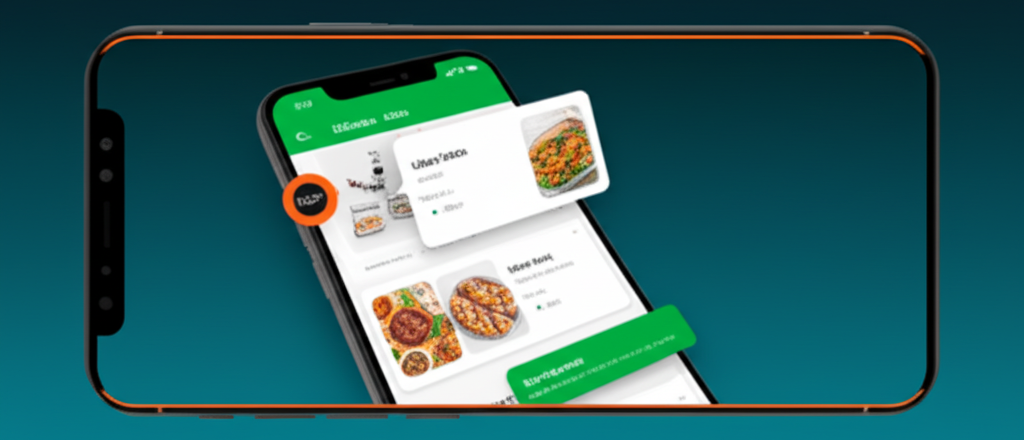
Uber Eats AI Grocery Shopping Assistant, 3 Key Features [2026]

Uber Eats Unveils AI Grocery Shopping Assistant

  • AI chatbot for searching ingredients, recommending discounts, and automatically building shopping carts
  • Solve everything from meal planning to budget management through conversation
  • Gradual rollout in the US, UK, Canada, and more

Conversational Shopping, Now Directly in the App

Uber Eats has integrated an AI conversational shopping assistant into its app. It’s powered by Google’s large language model and leverages data from over 900,000 merchants.[TechCrunch]

You can make requests in natural language, like “Plan a week’s worth of meals for under $100.” The AI will recommend recipes and automatically add the ingredients to your cart.[Uber Newsroom]

Discounted Items All in One Place

A feature called ‘Sales Aisle’ has also been introduced. It’s a digital deals corner that gathers discounted items from nearby supermarkets onto a single screen.[PaymentsJournal]

If an item is out of stock, the AI recommends replacements considering price, nutrition, and past orders. You can also directly decide whether to replace an item if the delivery person sends a photo from the store.[Uber Newsroom]

The AI Competition Among Delivery Apps is Heating Up

Instacart operates ‘Ask Instacart,’ and DoorDash runs ‘DashAI.’ Direct ordering through ChatGPT has also become possible.[Grocery Dive] Uber Eats has also announced the addition of 2,500 Aldi stores and support for SNAP-EBT payments. With rising grocery prices, the potential of AI grocery shopping is intriguing.

Frequently Asked Questions (FAQ)

Q: What are the features of the Uber Eats AI grocery shopping assistant?

A: It allows for meal planning, recipe recommendations, and automatic shopping cart creation through natural language requests. If you enter something like “A week’s worth of meals for under $100,” it will suggest recipes and ingredient lists. It also provides discount item searches and out-of-stock replacement recommendations.

Q: What is Sales Aisle?

A: It’s a digital deals corner that gathers discounted items from nearby supermarkets onto a single screen. You can see nearby discounts at a glance without having to check multiple stores separately. It also displays personalized promotions based on your purchase history.

Q: Can I use it in Korea?

A: It is currently available in select countries such as the United States, the United Kingdom, and Canada. Since Uber Eats has withdrawn from Korea, direct use is difficult. However, there is a possibility that similar AI features will be introduced to domestic delivery apps.


If you found this helpful, subscribe to AI Digester.

References

Remote Code Execution Possible in Windows Notepad [CVE-2026-20841]

Windows Notepad Remote Code Execution Vulnerability: 3 Key Takeaways

  • CVSS 8.8 Command Injection Vulnerability (CVE-2026-20841) Discovered
  • Remote Code Execution via Malicious Markdown File Link Click
  • Fixed in February Patch Tuesday

Notepad Hacked with a Single Markdown Link

Microsoft has patched a Remote Code Execution (RCE) vulnerability in Windows Notepad. It’s registered as CVE-2026-20841 and has a CVSS score of 8.8, a ‘High’ severity rating.[CVE Feed]

The root cause is a command injection (CWE-77). Opening a manipulated Markdown file and clicking a malicious link allows Notepad to process external protocols without proper validation. This could lead to fetching remote files and executing arbitrary commands.[CybersecurityNews]

Only Affects Store Version of Notepad

This vulnerability targets the modern Notepad versions 11.0.0~11.2510 distributed through the Microsoft Store. The classic notepad.exe is not affected because it lacks Markdown functionality.[BleepingComputer]

The attack complexity is low, and no special privileges are required. Just open the file and click the link, and you’re done.

Update Now, It’s the Only Answer

The fix was released on February 10, 2026, as part of Patch Tuesday. A total of 58 vulnerabilities were patched this time, including 6 zero-days.[Zero Day Initiative]

While there are no known cases of active exploitation yet, PoC code has been released. Update Notepad to the latest version from the Store ASAP. Enabling automatic updates is a good idea.

It’s easy to underestimate a text editor, but as it evolves into a modern app, its attack surface expands. Hope this helps!

Frequently Asked Questions (FAQ)

Q: Is the classic Notepad affected?

A: This vulnerability only affects the modern Notepad distributed through the Store. The classic notepad.exe is not affected because it doesn’t have Markdown rendering capabilities. Still, it’s always a good idea to keep your Windows security updates up to date.

Q: How serious is a CVSS score of 8.8?

A: It’s a high (High) severity rating, with 8.8 out of 10. The attack difficulty is low, making it relatively easy to exploit, but it requires user interaction (opening a file and clicking a link), so it’s not automatically self-propagating.

Q: Are there any actions I can take besides patching?

A: Updating Notepad to the latest version from the Store is the most important thing. Enable automatic app updates and avoid opening Markdown files from untrusted sources.


If you found this helpful, please subscribe to AI Digester.

References

Uber Eats AI Grocery Shopping Assistant, Grocery Shopping Will Change [2026]

Uber Eats: 3 AI-Powered Changes to Grocery Shopping

  • AI chatbot helps with everything from meal planning to building your shopping cart.
  • “Sales Aisle” feature lets you see personalized discounts all in one place.
  • Integration with ChatGPT allows you to order just by chatting.

Uber Eats Unveils AI Grocery Shopping Assistant

Uber Eats has added an AI-powered grocery shopping assistant to its app. This chatbot handles meal planning, grocery discount searches, and ordering recipe ingredients.[The Verge]

For example, if you say, “Plan three meals for the week for under $100,” the AI will recommend meals and automatically build a shopping cart with the necessary ingredients. No more endless scrolling to find products![PaymentsJournal]

Sales Aisle and ChatGPT Integration Too

The newly released “Sales Aisle” feature is also noteworthy. It gathers personalized discounts and promotions for each user on a single screen. This significantly reduces shopping time by eliminating the need to search all over the app.

ChatGPT integration has also been implemented. When ChatGPT detects a user’s intention to order, it confirms the delivery address, shows nearby stores and menus, and then connects to the Uber Eats app to complete the order.[Grocery Dive]

The Significance of the AI Competition Among Delivery Apps

Instacart and DoorDash are also releasing similar AI features. In the delivery app market, AI is now becoming a necessity, not an option. Uber Eats’ strategy goes beyond a simple chatbot, attempting to solve the everyday problem of meal planning with AI.

Its strength compared to competitors lies in its partnership with over 2,700 major supermarkets like Kroger, connecting directly to actual grocery shopping. However, it remains to be seen whether the AI-recommended meals meet actual health standards and whether it is biased towards discounted products. Hope this helps!

Frequently Asked Questions (FAQ)

Q: What features does the Uber Eats AI grocery shopping assistant offer?

A: The AI grocery shopping assistant provides meal planning, budget-friendly meal recommendations, grocery discount searches, and automatic shopping cart creation based on recipes. When users make requests in natural language, the AI creates a meal plan and shopping cart all at once. The Sales Aisle feature also allows you to see personalized discounts on a single screen.

Q: Is it possible to order from Uber Eats through ChatGPT?

A: Yes, it is. When ChatGPT detects an intention to order food during a conversation, it confirms the delivery address and displays nearby stores and menus on the ChatGPT screen. It then connects to the Uber Eats app to complete the actual order. This process flows naturally within the conversation without requiring a separate app switch.

Q: At which supermarkets can I use Uber Eats AI grocery shopping?

A: It is available at approximately 2,700 Kroger-affiliated stores. This includes Kroger-owned brands such as Mariano’s, Ralphs, King Soopers, and Harris Teeter. It can be accessed from the Uber, Uber Eats, and Postmates apps, and the number of affiliated stores continues to expand.


If you found this article helpful, please subscribe to AI Digester.

References

Tech Company ICE Silent, Employees Revolt [2026]

Over 1,000 Sign Petition Demanding Termination of ICE Contracts

  • Over 1,000 Google employees have signed a petition demanding the termination of contracts with ICE and CBP.
  • Employees from 16 companies, including Amazon, Microsoft, Meta, and OpenAI, have joined the effort.
  • Employee dissatisfaction is growing as company executives largely remain silent.

Minneapolis Incident Sparks Tech Industry Protest

In January 2026, an ICE agent fatally shot citizen Renee Good in Minneapolis. On January 24, nurse Alex Pretti also died.Time These incidents triggered collective action among Silicon Valley employees.

Initially, around 450 people signed an open letter. Employees from Google, Meta, OpenAI, Amazon, and Salesforce participated.TechCrunch Subsequently, Google alone gathered over 1,000 signatures.CNBC

Employees’ Three Demands

The ICEout.tech petition’s core demands are threefold. First, the CEO should call the White House and demand ICE’s withdrawal. Second, corporate contracts with ICE should be terminated. Third, they should publicly speak out against ICE’s violence.The Register

Amazon AWS provides data storage services to ICE. Microsoft and Oracle also supply cloud infrastructure to the Department of Homeland Security and ICE. These contractual relationships are fueling employee anger.

Executive Silence vs. Past Actions

What’s interesting is the contrast with past examples. In October 2025, Nvidia’s Jensen Huang and Salesforce’s Marc Benioff called Trump to withdraw threats of crackdowns in San Francisco. Employees know that CEO action can be effective.

But things are different now. The Register contacted 16 companies but received no immediate responses. OpenAI’s Head of Global Business, James Dietz, criticized that “tech leaders’ outrage over wealth taxes is far greater than ICE agents terrorizing communities.”

Movement Beyond the Tech Industry

Over 60 Minnesota-based CEOs signed a separate letter, including those from 3M, Best Buy, General Mills, Target, and UnitedHealth. They called for “de-escalation” and collaborative problem-solving.

Meanwhile, ICE is expanding surveillance using AI and facial recognition technology. Recently, it was reported that they requested companies to provide “commercial big data and advertising technology” products. The connection between tech companies and immigration enforcement is deepening.

Frequently Asked Questions (FAQ)

Q: Why are tech employees demanding the termination of ICE contracts?

A: The direct trigger was the January 2026 incident in Minneapolis where ICE agents fatally shot two citizens. Amazon AWS, Microsoft, Oracle, and others provide cloud infrastructure and data services to ICE, leading to growing ethical backlash against their technology being used for immigration enforcement. Employees believe CEOs can exert influence on the White House.

Q: How are companies responding?

A: Mostly with silence. The Register contacted 16 companies, including Amazon, Apple, Google, Meta, and Microsoft, but none responded immediately. However, there is a precedent from October 2025 when Nvidia and Salesforce CEOs directly called Trump to withdraw crackdowns, leading employees to argue that management can exert influence if they have the will.

Q: How is ICE using AI technology?

A: ICE is actively using AI and facial recognition technology for immigration enforcement surveillance. Recently, they requested companies to provide commercial big data and advertising technology products. Amazon AWS, Microsoft, and others provide cloud infrastructure, and this technical connection is fueling ethical backlash from employees.


If you found this helpful, please subscribe to AI Digester.

References

Telnet Traffic Plummets 83% — Hypothesis of Tier 1 Blocking Before CVE Disclosure [2026]

Telnet Traffic Plummets 83% — What Happened 6 Days Before the CVE Release?

  • On January 14, 2026, global Telnet sessions decreased by 65% in just one hour.
  • The GNU Inetutils telnetd vulnerability (CVE-2026-24061) was disclosed 6 days later.
  • Current Telnet traffic is about one-third of what it used to be.

50,000 Telnet Sessions Vanish in One Hour

On January 14, 2026, at 21:00 UTC, global Telnet sessions plummeted from approximately 74,000 to 22,000. Within two hours, they had dropped by 83% compared to the baseline[GreyNoise Labs]. Eighteen major ASNs went completely silent, and five countries, including Zimbabwe, disappeared from Telnet data.

Root Shell Takeover Vulnerability Revealed 6 Days Later

On January 20, CVE-2026-24061 was disclosed. A flaw exists in GNU Inetutils telnetd where argument injection occurs during the processing of the USER environment variable[NVD]. By sending -f root as the username, a root shell can be obtained without authentication. On January 26, CISA added it to the KEV catalog, requiring federal agencies to take action by February 16[CISA].

Hypothesis: Proactive Blocking by Backbone Providers

The reason for the traffic drop 6 days before the vulnerability disclosure is intriguing. GreyNoise researchers suggest that Tier 1 backbone providers may have received advance notice and implemented port 23 filtering[GreyNoise Labs]. Cloud providers were less affected. AWS traffic increased by 78%, and Contabo by 90%. Only residential ISPs took a major hit.

Currently, weekly Telnet sessions are at 320,000, a 70% decrease from the 1.08 million in early December. This accelerates Telnet’s demise. We recommend patching GNU Inetutils to 2.7-2 or disabling Telnet altogether.

Frequently Asked Questions (FAQ)

Q: How does CVE-2026-24061 work?

A: GNU Inetutils telnetd has an argument injection vulnerability when processing the USER environment variable. An attacker can send -f root as the username to bypass authentication and obtain a root shell. This is a critical vulnerability that allows remote takeover of the server without any authentication.

Q: What should I use instead of Telnet?

A: SSH (Secure Shell) is the standard replacement. It encrypts all communication and supports key-based authentication. Telnet transmits data in plaintext, making it a long-standing security risk. This incident highlights that many systems are still running Telnet.

Q: Does this affect regular users?

A: Mostly, there’s no direct impact. Telnet is primarily used for server administration and network equipment configuration. However, older IoT devices or industrial equipment might rely on Telnet, so administrators should consider patching or switching protocols.


If you found this helpful, please subscribe to AI Digester.

References

xAI Merged with SpaceX — 3 Key Points: Moon Factory and IPO [2026]

xAI-SpaceX Merger, Moon Factory, IPO — 3 Key Takeaways

  • SpaceX acquires xAI for $250 billion, the largest merger ever
  • Half of xAI’s 12 co-founders have resigned
  • Musk unveils plans to build an AI satellite factory on the moon

SpaceX-xAI, $1.25 Trillion Merger

On February 2nd, Musk announced the merger of SpaceX and xAI. The combined enterprise value is $1.25 trillion, the largest ever[CNBC]. The goal is to combine AI and rockets to create orbital data centers[TechCrunch].

Half of the Co-founders Left

Departures accelerated immediately after the merger. On February 10th, Tony Wu and Jimmy Ba resigned simultaneously[CNBC]. Babushkin, Kosik, and Szegedy had previously left, and Greg Yang stepped down due to Lyme disease. Six out of 12 are gone[TechCrunch].

Shooting AI Satellites from a Moon Factory?

Musk said in a staff meeting that he would build a factory on the moon. The idea is to build AI satellites and launch them into space with an electromagnetic catapult[TechCrunch]. Electromagnetic launch is possible on the moon because there is no atmosphere[Space.com]. This reverses his statement from 13 months ago that “the moon is a waste.”

The IPO is scheduled for June, with a target valuation of $1.5 trillion[Yahoo Finance]. It remains to be seen whether it will go smoothly, given the continuous departure of founders.

Frequently Asked Questions (FAQ)

Q: What is the main reason for the SpaceX-xAI merger?

A: It is a strategy to build orbital data centers in response to the explosive demand for AI. The idea is to combine SpaceX’s rockets and xAI’s AI to create a space-based computing infrastructure. They aim to solve the power and cooling limitations of terrestrial data centers in space.

Q: Why are xAI co-founders leaving?

A: Officially, it’s for personal reasons. Greg Yang’s reason was Lyme disease. However, considering the concentration of departures immediately after the merger, it is presumed that changes in roles or differences in vision after joining SpaceX had an impact.

Q: Is a moon factory realistic?

A: Electromagnetic mass drivers are theoretically possible. Since there is no atmosphere on the moon, it is possible to launch without friction. However, since there is no precedent for building manufacturing facilities on the moon, it is likely to be a long-term project lasting more than 10 years.


If you found this article helpful, please subscribe to AI Digester.

References